

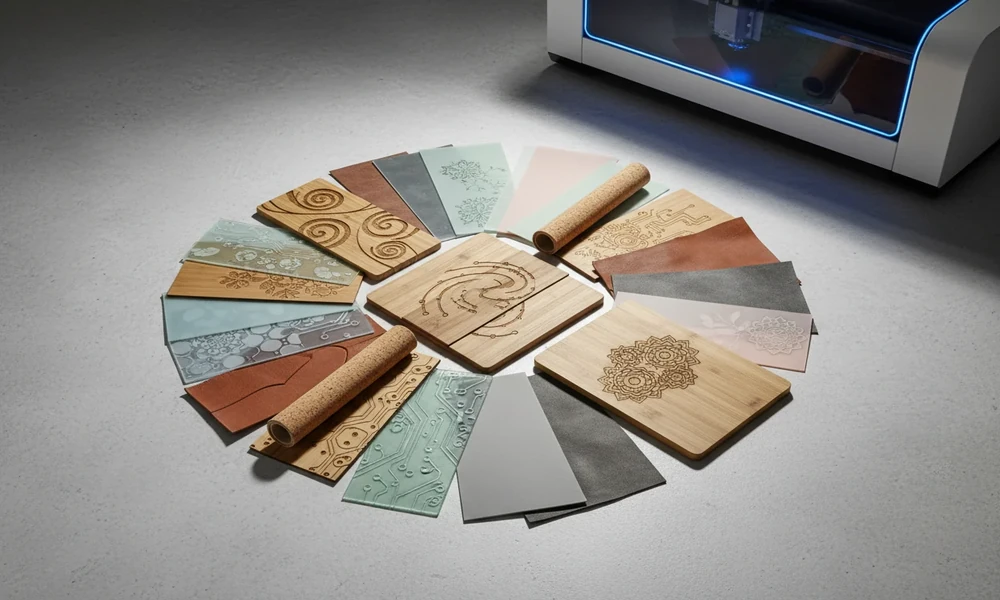
Getting permanent high-detail marks that will stay legible throughout the years is not as simple a task as one might think. Many workshops and manufacturers alike opt for the laser engraving singapore method to achieve the seemingly impossible task of making something last-defining and non-erasable by the usual means. However, the quality of the obtained result is determined by a variety of factors, the balance of which can oftentimes be tricky to achieve. A slight miscalculation or an omission can render the fine lines and patterns unreadable and unfollowable, while the correct interplay between various aspects will render it indestructible for the time being.
Preparing the Surface Correctly
The state of the surface plays a much bigger part in the outcome than one might initially guess. Contamination, unevenness, or other peculiarities can greatly impact the ability of the laser to etch well-defined geometries on the surface. A few extra minutes spent on the proper preparation can yield visibly better results due to a better beam interaction with the workpiece.
Make sure to remove any impurities, greasy spots, or other unwanted materials from the surface before engraving.
- Check the surface for irregularities.
- Limit the use of masks to spots that require special attention.
- Measure the material’s thickness to determine the power required for etching.
Determining the Optimal Power and Speed Settings
The interplay between power and speed is perhaps one of the most important factors in laser engraving singapore. Essentially, a combination of those two determines the depth and, consequently, the visibility of the obtained marks. A higher power with a slower speed allows for the creation of deeper and therefore more durable markings, while less aggressive settings are better suited for thin materials.
The right combination can be found by trial and error, but most professional engravers suggest a series of test passes on separate pieces before actually engraving the workpiece itself. This way, one can also determine the best power-speed combination for different densities of the same material, if applicable.
- Apply several power tests on separate samples of the material to find the deepest achievable marks for the given material.
- Find a suitable speed, which, when combined with power, will allow for uniform and non-deformed markings.
- Recalculate the settings for thinner materials to avoid burning.
- Store the necessary settings for similar materials for future reference.
Ensuring Tight Focusing
A focused laser beam is the primary instrument in any engraving task. A proper focus makes it possible to achieve the precision and intricacy of markings that cannot be achieved by any other engraving method. On the other hand, improper focusing will, in all likelihood, lead to poor results due to the inability of the beam to reach the surface correctly. In many cases, it is especially important to ensure the beam is focused properly when working with objects smaller than the engraving table and larger than standard sizes.
- Set the focus based on the measured height of the workpiece.
- Select the lens, the focal length of which is adequate for the task at hand.
- Re-focus as necessary after switching from one fixturing to another.
- Make sure there are no dust particles or other foreign matter on the lens.
Checking the Final Results
Checking the results of laser engraving singapore always serves as the ultimate test of one’s skill and preparedness. After the necessary pattern has been etched onto the surface, a simple inspection can reveal minor flaws that can be avoided in the future. Moreover, some aspects of the quality control process serve as the best teachers for improving one’s engraving skills.
Check the engraved part visually and manually for overall quality.Scratch a small sample area to test the resilience of marks.Compare the depth of markings to the specified requirements.Note any flaws that may have occurred to ensure they are accounted for in the future.
